When I was young my cooking was awful! I let my imagination drive and it’s quite a good imagination. I would simply picture some delicious concoction, guess what ingredients must be involved and proceed to cook. Only to be gutted when it turned out imagination is not enough to conjure results!
My glaze development followed the same structure – I would decide what ingredients would surely produce the delightful glaze I imagined and proceed to mix a 20 litre bucket of it. So confident was I in my imagination that it shocked me when the resulting glazes turned out to be awful.
Eventually I got sick of having 20 litre buckets of useless glaze and applied myself to testing small amounts.
No one would call my approach today particularly tidy or precise but I do have a book where I write down every damn time I try something new. If I change anything in the kiln I…write….it …..down!
When there is going to be months or years between when I try something that turns out nicely, and when I come back to use it again, I have learned to write……….it ………..down!
I went through a stage of laboriously testing and developing a set of glazes to pour on and layer with. All that effort didn’t really produce what I wanted.
One of my early mentors Paddy Bambling generously shared her glazes (if you are at convention hit me up I am happy to pass them on.)
Today I use 6 favourite glazes collected over time. At least half of which have Paddy’s celadon as their base.
When I knew her Paddy raw glazed (once firing). A process of applying glaze to raw pots at the leather hard stage instead of bisque firing and then glazing.
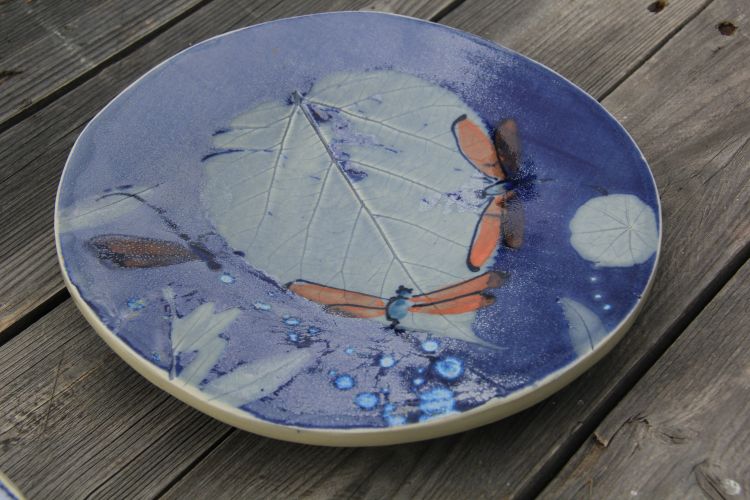
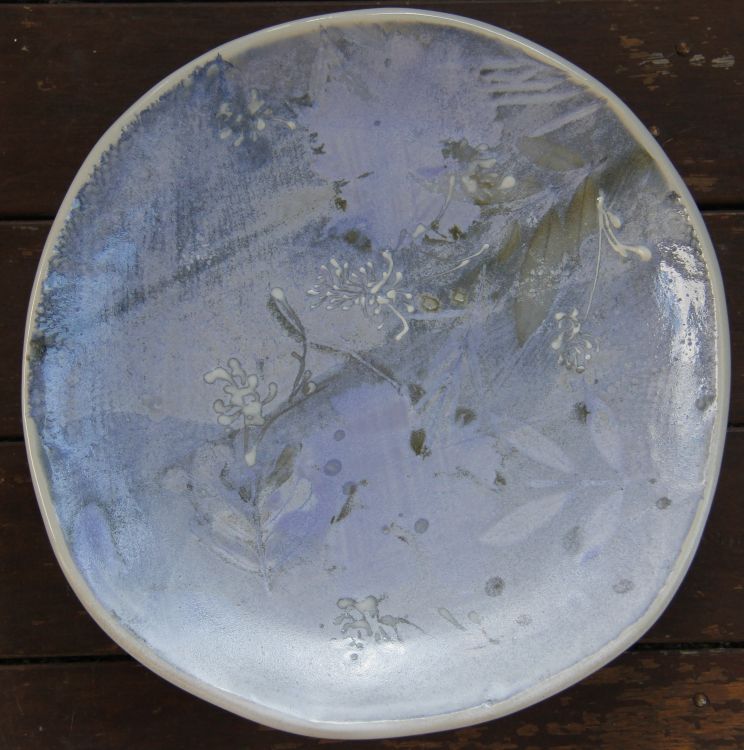
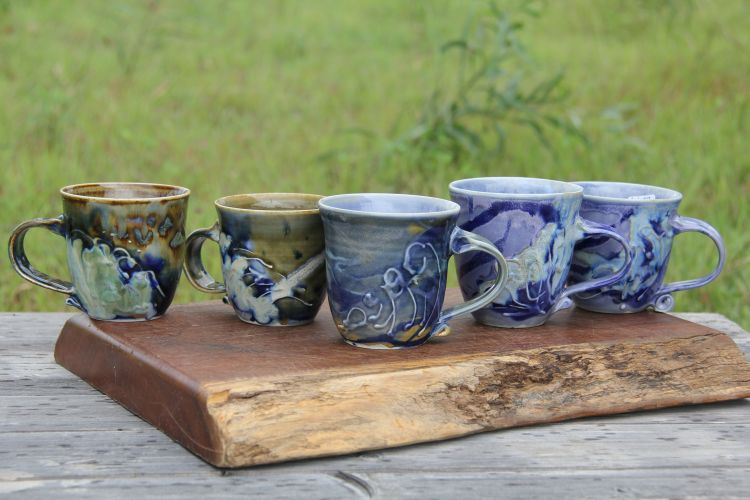
Initially, I too raw glazed enthusiastically, and couldn’t understand why anyone would put themselves through unpacking and packing a kiln just to bisque.
As a working parent I now bisque – that perfect leather hard stage seems impossible to catch. It is hard to let go of my high clay raw glazes even though I feel they might be limiting the effects I can achieve. I have introduced one clear glaze low in clay from another generous potter Jackie Gasson but I get frustrated when I bump things and it chips off easily. I also stick to minerals I believe to be reliably safe food and slightly less toxic if I get it all over me. I use iron, rutile, talc, tin, zinc and cobalt for inside cups and bowls. Commercially prepared underglazes are great for a bit of colour.
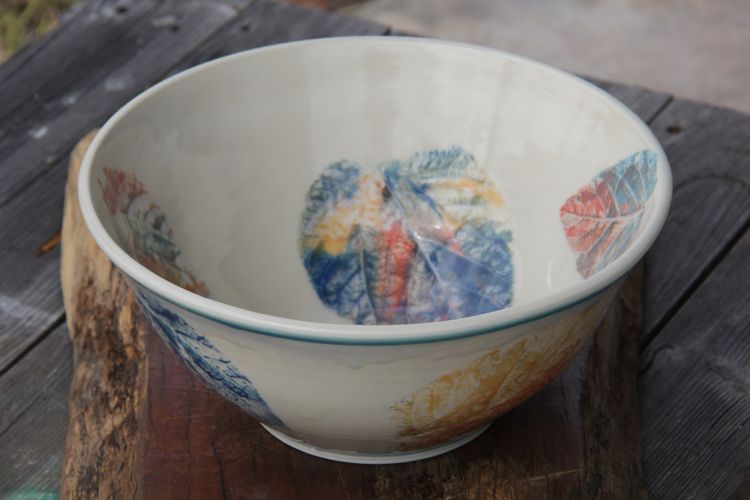
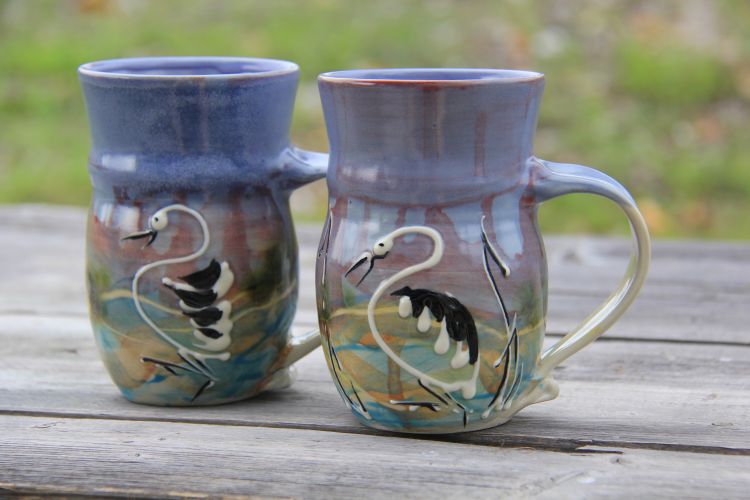
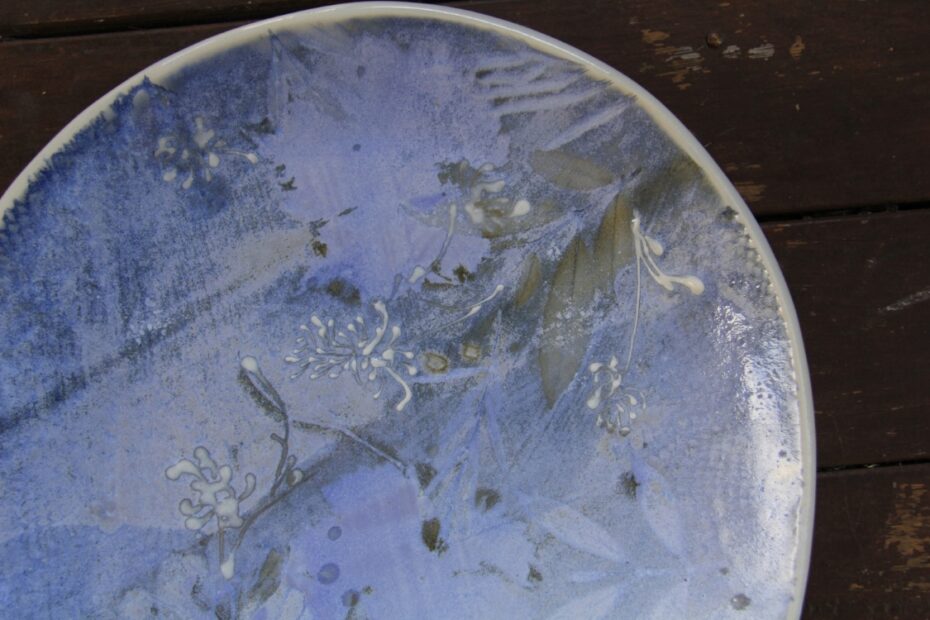
At the moment I am enjoying discovering how to get the best out of my six glazes. Dialing in on exactly what they can do. Thanks to the 3-cone temperature difference in my aged, and well-traveled gas kiln, I am learning what each of my glazes look like at different temps.
it’s amazing how many different effects I can make with six glazes. The bisque ware tolerates the application of more layers of glaze than the leatherhard clay. So I layer glazes in different combinations and I write down what I do. Sometimes I add light glaze decoration in the making stage and bisque that to add more depth.
A hydrometer is a very useful tool that i have found helps me achieve consistent results. Each time I use my glaze I can make it exactly the same thickness. I think I got this idea from Janet Deboos at a WBBPA convention but I can’t remember for sure. I have attached a couple of weblinks here to give you an idea how to DIY
https://www.wikihow.com/Make-a-Hydrometer
https://ceramicartsnetwork.org/daily/article/Make-Your-Own-Hydrometer-for-Glazing-Success
I would still like to develop the skill of visualizing a glaze and proceeding to test and create it. It is just not where my life is right now!